

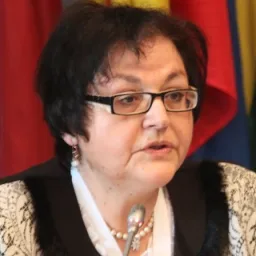
Gordana Čomić10. 11. 2026. · nekadašnja ministarka za dijalog, ljudska i manjinska prava
📰 EuroNewsOriginal ↗

Demokratska stranka (skraćeno DS) je socijaldemokratska politička stranka u Srbiji. Od 2024. predsednik stranke je Srđan Milivojević. DS je 1990. osnovala grupa intelektualaca koji su nastojali da ožive Demokratsku stranku, koja je delovala u Kraljevini Jugoslaviji. Dragoljub Mićunović je bio prvi predsednik stranke do 1994, a pod njegovim rukovodstvom DS je ušla u Narodnu skupštinu Srbije i učestvovala u antivladinim protestima protiv Slobodana Miloševića. Nakon izbora Zorana Đinđića za predsednika stranke 1994, DS je reorganizovana a on je uveo u koaliciju Zajedno. DS je učestvovala na demonstracijama 1996—1997, koje su se desile nakon što je Izborna komisija poništila rezultate lokalnih izbora u gradovima u kojima je koalicija Zajedno pobedila. DS je kasnije predvodila Savez za promene, koji je u januaru 2000. postao deo Demokratske opozicije Srbije (DOS). DOS je pobedio na predsedničkim izborima, ali je Milošević, tadašnji predsednik Savezne Republike Jugoslavije i predsednik Socijalističke partije Srbije (SPS), odbio da prihvati rezultate, što je kulminiralo njegovim svrgavanjem. DS je preuzeo vlast u Srbiji nakon pobede na parlamentarnim izborima u decembru 2000. i Đinđić je postao predsednik Vlade Srbije. Đinđić je ubijen u martu 2003, a na mestu predsednika DS nasledio ga je Boris Tadić. Tadić je zatim postao predsednik Srbije, dok je DS bila u opoziciji od 2004. do 2007, kada je postala deo koalicione vlade koju predvodi Demokratska stranka Srbije. Tadić je doveo DS do pobede 2008. kada je obrazovana koaliciona vlada sa SPS. 2012. nakon formiranja koalicije Socijalističke partije srbije i Srpske napredne stranke, DS se vraća u opoziciju. Dragan Đilas je postao predsednik DS decembra 2012. 2013. godine je smenjen sa mesta gradonačelnika Beograda, ali je ostao na funkciji nakon internog glasanja o nepoverenju u januaru 2014. Njega je u maju 2014. na mesto predsednika DS nasledio Bojan Pajtić. Dragan Šutanovac je postao predsednik DS posle Pajtićeve ostavke 20
Izvor: Vikipedija (CC BY-SA 4.0)
DS was a catch-all party during its early period and was composed of ideologically heterogeneous groups. It included the founders of the Praxis School, Mićunović and Đinđić, who were labelled liberals, as well as Čavoški, Koštunica, and Milošević, who argued for the adoption of a stronger anti-communist position inside the party. DS was also divided on nationalism, with members such as Gligorov and Inić arguing that nationalism should be solved within a common Yugoslav state, while members like Đogo favoured a Greater Serbian policy. DS supported a mixed economy with a strong role of the market, but it also sought to implement reforms towards establishing a modern market economy and integrating Serbia into the European Community. DS adopted a "civic and centrist identity", and in its Letter of Intent of December 1989, it stated its support for the establishment of a democratic and multi-party system. Regarding Yugoslavia, DS supported federalisation and a pluralistic democratic order to guarantee human security and personal freedom and decrease ethnic conflicts. Political scientist Dijana Vukomanović has argued that DS has promoted liberalism in an economic and democratic sense since its formation, and noted that, in its 1990 programme, DS emphasised establishing a representative parliamentary democracy, and advancing human and political freedoms and civic rights. By contrast, political scientist Vukašin Pavlović has noted that DS could be described as centre-right at the time of its formation in 1990 due to its founders' ideological positions. Likewise, Metropolitan University Prague lecturer Marko Stojić has described DS in its founding era as centre-right because its programme advocated a liberal market economy and minimal role for the state. Political scientist Vladimir Goati has positioned the 1990s DS on the moderate right, noting its support for private property rights and the omission of the regulatory and redistributive functions of the state from its 1992 programme. Goati has also categorised the party as liberal-democratic, explaining that after 1993, DS began to use less anti-communist rhetoric compared with other opposition parties. In 1991, then-Washington Post journalist Blaine Harden described DS as a "moderate, opposition" party, and in a 1999 report, BBC News described DS as centrist. Scholar Slaviša Orlović has noted that the party "provide[d] a balance of goals of the right and left political traditions". Political scientist Slobodan Antonić has stated that although DS was formed as a civic party—in its 1992 programme, DS identified itself as a "civic, national, liberal, and socially responsible" party—it had a "nationalistic phase" in the mid-1990s, supporting the "modernisation of the country" as well as the self-determination of Serbs, but that, soon after, it returned to civic positions. Additionally, political scientist Jovan Komšić has noted that DS moderated its stance on nationalism after the 1995 Dayton Agreement, thereafter focusing on the "democratisation of Serbia". Goati has described DS as an anti-system party because it opposed the 1990 constitution. Under Đinđić, DS shifted to more pragmatic and flexible approaches and principles, becoming the leading anti-Milošević party after 1998. Đinđić has been described as a pro-Western reformist and a technocrat. DS advocated for denationalisation and free mass distribution of shares, and established the Centre for Privatisation. However, DS also supported the right to work, trade union rights, social security, and the fight against unemployment. DS described these economic positions as "people's capitalism", but the party dropped these positions after coming to power in 2001, when it began promoting neoliberalism. DS was also associated with the "shock therapy" group of economic policies. DS supported policies that would bring Serbia closer to the West and reintegrate Serbia into the international community, and also supported the extradition of Serbian citizens that were indicted by the ICTY.
Despite trying to position itself as a social democratic party after Đinđić's assassination, Vukomanović has argued that the leadership of DS did not "dare to take a decisive step towards the left". Political scientist Zoran Stojiljković has noted that, instead, it shifted towards social liberalism. On the other hand, political scientist Zoran Slavujević argued in 2003 that, at the time, DS "was still positioned between the centre and centre-right". Others have described DS under Tadić as centrist, and as associated with liberalism and social liberalism. Tadić has been described as a liberal, a label he accepts. During his leadership, he was considered to be popular amongst businessmen due to his support for the accession of Serbia to the European Union. Despite being supported by liberals, DS would occasionally position itself as a "state-building party of the centre-left". During Tadić's tenure, DS was the leading party of the liberal and pro-European bloc, but it also promoted privatisation to accelerate Serbia's economic development. Stojić has noted that DS' programmatic shift towards social democracy began in 2007, but while in government, DS did not pursue a social democratic agenda. DS under Tadić has been described as internationalist and pro-Western. Although it also declared itself in favour of military neutrality, DS expressed sympathy for, and its government ministers cooperated with, NATO. DS also believed that the political status of Kosovo should be solved via diplomacy, although it did not adopt a clear stance on the issue following Kosovo's declaration of independence in 2008. Under Tadić, DS took a balanced approach towards foreign relations; for example, a year after Kosovo's declaration, Tadić hosted U.S. Vice-president Joe Biden and Russian President Dmitry Medvedev for talks. Shortly before the 2012 elections, Serbia received candidate status for European Union membership. To attract ethnic minority voters, DS exploited the cultural-ideological cleft in Vojvodina, seeking to attract voters from minority interests parties, and promoted regionalism. DS also advocated for the improvement of the standard of living and for a balanced regional development, and proposed the creation of an independent body that would implement anti-corruption measures in the judiciary.
After 2012, DS shifted further to the left and began identifying itself as social democratic, a description which has since been accepted by scholars and political observers. Stojić has categorised DS as social democratic and as a party with a "liberal legacy". DS has been described as being on the centre-left of the political spectrum. By contrast, Dušan Spasojević, a professor at the Faculty of Political Sciences of the University of Belgrade, has described DS' social views as being orientated towards the left. A former leader of DS, Zoran Lutovac, describes himself as a leftist. DS has served in opposition to SNS since 2012. It has been critical of the government's stance on Kosovo, although it supported the 2013 Brussels Agreement. In an interview, Šutanovac described the Kosovo issue as a "not an everyday political problem". During the North Kosovo crisis in 2023, DS voiced its opposition to the Ohrid Agreement, with Lutovac claiming that "the agreement does not respect the interests of Serbia and the rights of Serbs in Kosovo" but also because DS "does not want to give Vučić legitimacy for what he did". When Đilas led DS in opposition to SNS during the 2014 election, he pledged to provide free textbooks for students and full salaries for pregnant women, increase wages for healthcare workers, and help pensioners. DS is opposed to jadarite mining and was one of the signatories of an agreement on the prohibition of exploration, exploitation, and processing of lithium in Serbia in October 2021. DS has declared itself to be "the bearer of the most progressive ideas"; it is in favour of protecting workers, minorities, and the environment, and it supports guaranteed rights to healthcare, education, and pensions. In 2014, the Gay Straight Alliance, an association that promotes LGBT rights in Serbia, described DS as the "most positive party towards the LGBT community". DS has condemned violence against the LGBT community and in August 2022, it supported hosting 2022 EuroPride in Belgrade. It has also criticised the attacks on the Pride Info Centre in Belgrade.
Before the federal parliamentary election in December 1992, a majority of DS supporters preferred a citizen state (građanska država) over a nation state (nacionalna država). According to political scientist Dragomir Pantić, supporters of DS in the 1990s shared similar characteristics with supporters of DSS, GSS, and other minority parties. DS supporters were young and urban, and they came from the middle and upper classes. Public intellectuals, technicians, and those who worked in the private sector were also supporters of DS. After 2000, DS voters professed liberal-democratic values; they were also less religious, opposed to authoritarianism and centralism, and supportive of political reforms. Political scientist Ilija Vujačić, however, has argued that DS supporters in the 21st century skewed more towards the political centre. In 2007, political scientist Srećko Mihailović noted that a majority of DS supporters identified with the left—18% with the far-left, 22% with the left-wing, and 25% with the centre-left—while 18% described themselves as centrist. According to a 2005 opinion poll, 66% of DS supporters thought Serbia should rely on the European Union for Serbia's foreign policy. In opinion polls conducted prior to the 2008 elections, a majority of DS supporters declared themselves to be pro-European. In 2012, a majority of DS voters were female, below 50 years old, and possessed a high school or university diploma. DS supporters were mostly workers, technicians, officials, and dependents. In 2014, 80% of DS supporters were female, 60% of supporters were under 50 years old, and a majority of supporters held either a high school or university diploma. In 2014, most DS supporters were tolerant of diversity and they rejected authoritarianism and nationalism. By 2016, most DS supporters were younger than 40. November 2020 research conducted by the Heinrich Böll Foundation found that supporters of DS viewed themselves as socially progressive.